What is FYST? The Fred Young Submillimeter Telescope (FYST) is a 6-meter/20 feet diameter next-generation telescope operating at submillimeter to millimeter wavelengths and sited at an elevation of 5,600 meters/18,400 feet on Cerro Chajnantor in the Atacama Desert of northern Chile. The novel two-mirror design produces a high-throughput wide-field-of-view telescope capable of hosting a camera with more than 100,000 individual detectors so that large areas of the sky can be scanned rapidly. Breakthrough science goals enabled by legacy surveys motivate the unique characteristics and location of the FYST. The telescope itself was designed and constructed by CPI Vertex Antennentechnik GmbH of Duisburg, Germany.
Why submillimeter astronomy? Observations of the sky at submillimeter wavelengths allow astronomers to observe the “cold” universe, the clouds of molecular gas and dust that are not visible to optical telescopes like Hubble, Rubin or the VLT. Studying the distribution, physical conditions and composition of these clouds yields unique insight into the earliest stages of star and planet formation and the evolution of dust-obscured galaxies and supermassive black holes across cosmic time. In addition, submillimeter observations are critical to the interpretation of maps of the Cosmic Microwave Background (CMB) used to probe fundamental questions of cosmology, gravitational waves, dark energy and dark matter.
Why Cerro Chajnantor? Submillimeter radiation from the cosmos is absorbed by water vapor molecules in the Earth’s atmosphere, necessitating the location of the FYST at a high and dry site. Even the expansive plateau that hosts the Atacama Large Millimeter Array (ALMA) is higher than Mont Blanc and any peak in the Rocky Mountains range of North America. The substantially higher CCAT site offers superb observing conditions, allowing routine access to the 350-micron window and improved performance at longer wavelengths. From an astronomer’s perspective, the southern hemisphere location is particularly beneficial as the center of the Milky Way sweeps across its zenith and more than 90% of the whole sky is visible over the course of a day.
Who is CCAT? The CCAT Corporation is a not-for-profit partnership of Cornell University, a German consortium consisting of the University of Köln, the University of Bonn and the Max Planck Institute for Astrophysics, and Duke University. CCAT Corporation operates the CCAT Observatory as a joint venture with the Canadian Atacama Telescope Corporation (CATC), a consortium of eight Canadian universities led by the University of Waterloo. Additional researchers in the U.S., Canada, Germany and Chile are involved in science planning and instrument development. All of the CCAT partner academic institutions prioritize research and education in their core missions.
Who is Fred Young? Fred M. Young, Jr. is a Cornell alumnus (BE ’64, MEng ’66, MBA ’66) and retired businessman who shares a passion for astrophysics and cosmology. Since his first trip to Chile in 2002, he has been an active, enthusiastic and generous supporter of the CCAT project, participating in many of the discussions, board meetings, project reviews and working groups. The naming of the telescope after him is a reflection not just of his financial support for the project but also for his long-standing commitment to the dream of building it.
How is Chile involved? CCAT operates in Chile under a cooperative agreement with the University of Chile and under the auspices of the Ministry of Foreign Affairs. The observatory is located inside the Atacama Astronomical Park (PAA) on a concession granted by the Ministry of National Assets and overseen by the National Agency on Innovation and Development (ANID). An agreement with the Chilean Time Allocation Committee (CNTAC) governs engagement by researchers in the CCAT key projects. Chilean representatives hold seats on the CCAT Board of Directors and the CCAT Science Board. Chile is a welcoming host country for which CCAT is most grateful.
What questions will FYST address? The science program envisaged for FYST includes a suite of major mapping surveys that exploit the telescope’s unique capabilities and are undertaken by teams of scientists from the partner institutions. With its state-of-the-art PrimeCam camera and spectrometer, FYST will discover and catalog the dusty, star forming galaxies responsible for the reionization of the Universe at the end of the epoch of “Cosmic Dawn” a few hundred million years after the Big Bang, trace their evolution from then through “Cosmic Noon” and use them to test models of universal expansion. Of special note, FYST maps of the CMB and the emission from dust in our Milky Way galaxy will contribute important constraints on the theory of inflation and new types of fundamental particles. It will also measure the growth and motions of the massive clusters of galaxies by observing with great precision how the CMB photons interact with electrons in the hot gas that pervades the clusters (the “Sunyaev-Zel’dovich (S-Z) effect”), thereby constraining theories of dark matter and dark energy. In our own Galaxy, FYST will map the dust emission across the Milky Way to determine the role of turbulence and magnetic fields in the process of star formation. Using its CHAI spectrograph, FYST will explore the “galactic ecology” of the dynamic interstellar gas clouds found in distinctly different environments within the Milky Way and also our near neighbor galaxies, the Magellanic Clouds. Analysis of the survey data will also discover astronomical transients, sources which suddenly appear and then disappear from view, some of which are well-known and understood, while others are surprising and mysterious.
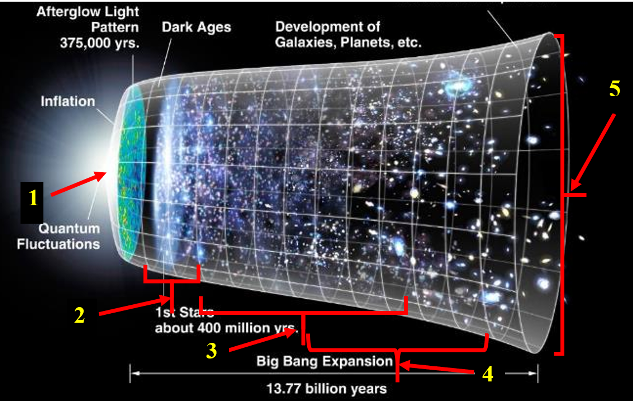
FYST observations will use:
- CMB polarimetry to probe gravitational waves from the inflationary epoch.
- Line Intensity mapping to trace the birth of the first stars and galaxies at Cosmic Dawn.
- Continuum surveys to trace the history of dusty galaxies through Cosmic Noon.
- The S-Z effect to trace the growth of massive clusters and large-scale structures and test universal expansion.
- Spectroscopy to reveal the processes of star formation in the Milky Way and nearby galaxies.